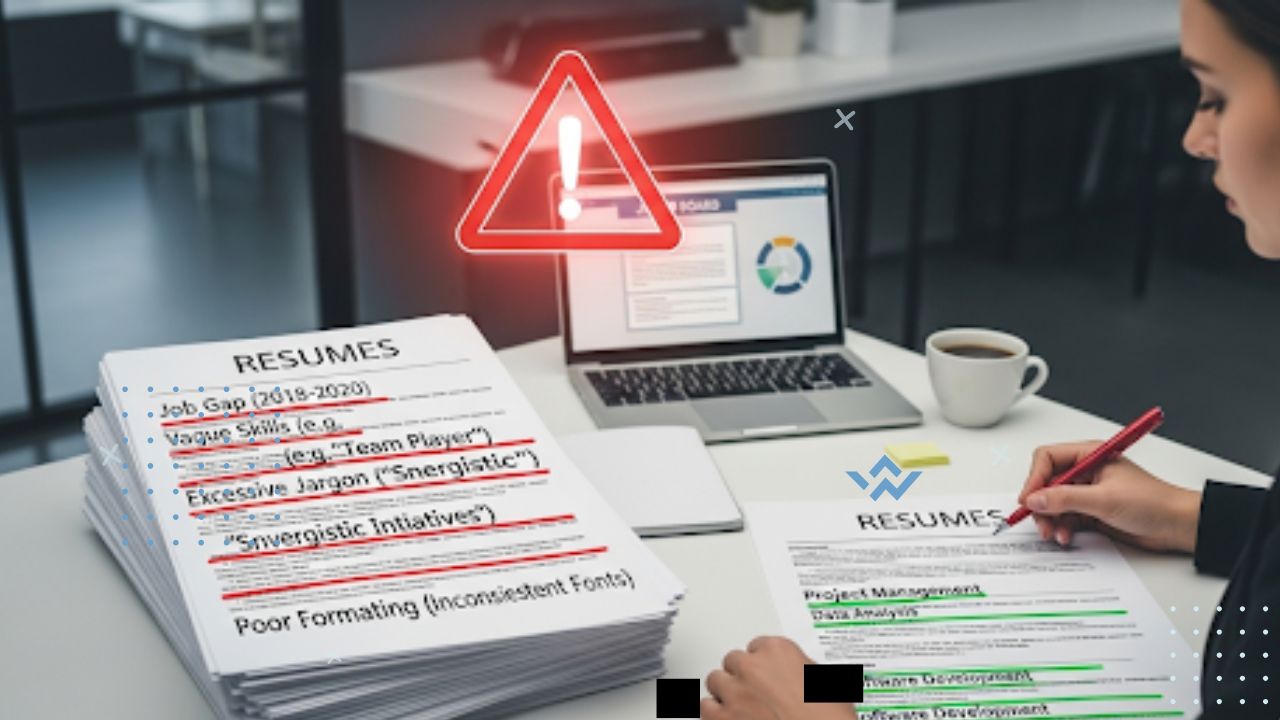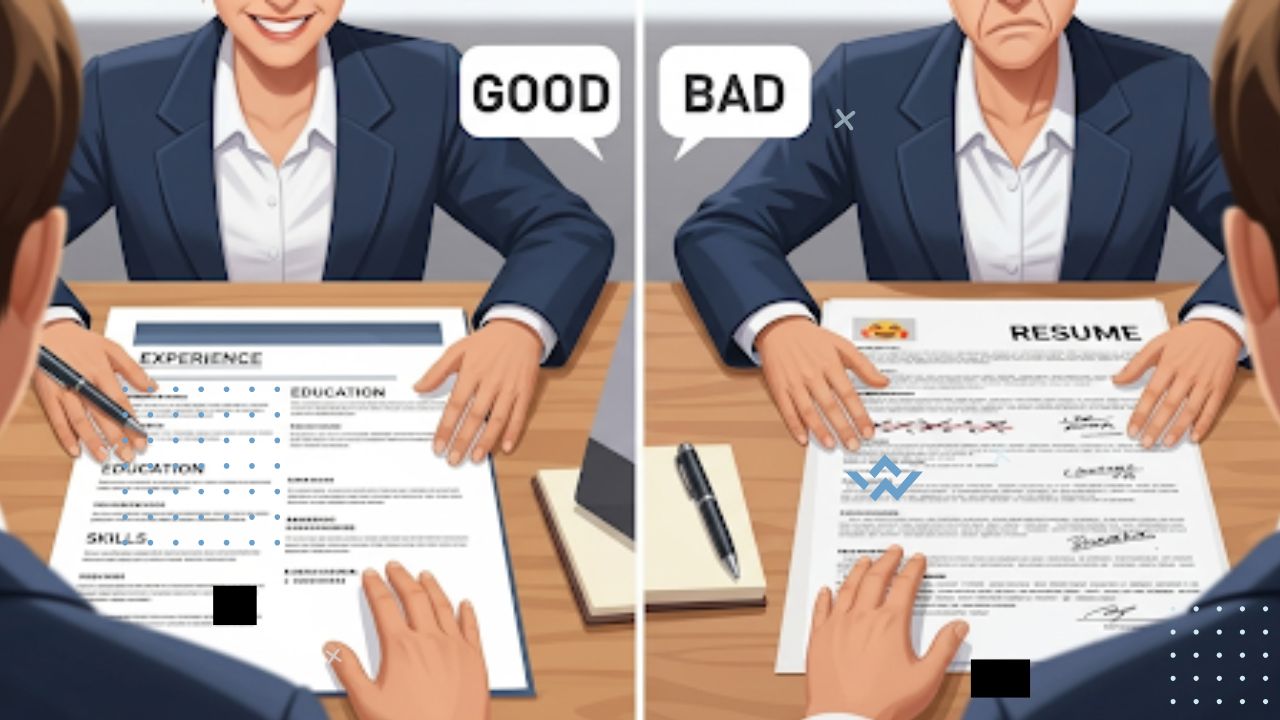
Your resume is like a handshake before you even walk into the room. It’s the first impression you give to an employer and trust me, first impressions matter. The difference between a good resume and one full of mistakes can be the difference between getting an interview and getting ignored.
A Good Resume Is Clear and Easy to Read
Imagine you’re a hiring manager with 100 resumes to go through. Which one would you prefer:
- A neat, well-organized document with clear headings and bullet points
- Or a cluttered, cramped page filled with long paragraphs and inconsistent formatting?
The choice is obvious.
What a good resume does:
- Uses a simple, professional font (Arial, Calibri, Times New Roman)
- Keeps font sizes consistent (10–12 pt for text, slightly larger for headings)
- Organizes sections with clear headings: Experience, Skills, Education
- Uses bullet points instead of giant text blocks
What a mistake-filled resume does:
- Switches fonts mid-page
- Crammed text with no white space
- Random bolding and underlining everywhere
- Hard-to-read design that looks messy
Rule of thumb: If your resume looks like work to read, the recruiter won’t bother.
A Good Resume Is Error-Free
This one sounds simple, but it’s huge. A single typo can make you look careless.
Good resume:
- Proofread multiple times
- No spelling or grammar mistakes
- Consistent punctuation and capitalization
Mistake-filled resume:
- Typos like “mangaged team” instead of “managed team”
- Mixing periods at the end of some bullet points but not others
- Random capitalization (Worked With Clients)
Hiring managers won’t always tell you why they rejected your resume, but little errors like this are often the reason.
A Good Resume Tells a Story
Your resume should do more than list jobs it should tell the story of your career growth.
Good resume example:
- “Promoted to team lead after one year, managing five junior staff and increasing efficiency by 20%.”
- “Designed and launched a new filing system that reduced paperwork by 30%.”
Mistake-filled resume example:
- “Responsible for managing staff.”
- “Did filing and office tasks.”
The difference? One shows achievements and results, while the other just lists tasks.
Employers want to know not just what you did but how well you did it.
A Good Resume Uses Consistent Formatting
Formatting can make or break your resume. Even if your experience is impressive, messy formatting mistakes makes it look unprofessional.
Good resume does:
- Uses one date style throughout (e.g., Jan 2022 – Dec 2023)
- Aligns job titles, company names, and dates neatly
- Keeps bullet points consistent in length and style
Mistake-filled resume does:
- Uses different date styles (Jan 2022–Dec 2023 in one role, 2022–23 in another)
- Job titles are bolded in one place and not in another
- Bullet points are a mix of one-word entries and long sentences
Consistency = professionalism.
A Good Resume Focuses on Results
Hiring managers don’t just want to know what you were “responsible for.” They want to know what you achieved.
Good resume phrases:
- “Increased sales by 15% in six months”
- “Reduced customer wait times by 30% through process improvements”
- “Trained five interns, three of whom later became full-time hires”
Mistake-filled resume phrases:
- “Responsible for handling customers”
- “Worked on sales”
- “Did training”
Replace “responsible for” with action verbs like developed, created, improved, managed, or led.
A Good Resume Fits the Job
The best resumes aren’t one-size-fits-all. They’re tailored to the job you’re applying for.
Good resume does:
- Includes keywords from the job description
- Highlights relevant experience
- Removes unrelated jobs or skills that don’t add value
Mistake-filled resume does:
- Sends the same generic version to every job
- Includes irrelevant details like high school achievements (if you’re years into your career)
- Buries the most important skills where no one will notice
Tailoring your resume shows the employer you’re serious about their job, not just any job.
A Good Resume Balances Length
Some candidates cram everything onto one page, while others write a five-page autobiography. Neither works.
Good resume does:
- Sticks to 1–2 pages (depending on experience)
- Prioritizes recent, relevant roles
- Leaves out outdated or irrelevant information
Mistake-filled resume does:
- Includes every job ever worked, even that summer gig from 12 years ago
- Adds too much personal info (hobbies, favorite movies, family details)
- Feels overwhelming instead of focused
Employers want highlights, not your life story.
Your Questions Answered
Q1. How do I know if my resume is mistake-free?
Read it out loud, print a copy, and ask a trusted friend to review it. Fresh eyes often catch what you miss.
Q2. Should I use a resume builder or make my own?
Resume builders are fine if they produce clean, ATS-friendly designs. Just avoid overly decorative templates that might confuse recruiters.
Q3. What’s the most important difference between a good and bad resume?
Clarity. A good resume is clear, consistent, and shows achievements. A bad one is cluttered, inconsistent, and filled with errors.
Final Thoughts
A good resume isn’t about fancy designs or buzzwords it’s about clarity, professionalism, and results. A mistake-filled resume distracts from your strengths and gives hiring managers reasons to say “no.”
The good news? Most mistakes are easy to fix once you know what to look for. With a little polishing, you can turn your resume into a tool that works for you instead of against you.