Hey, fresh grad! You’re ready to jump into the job market, degree in hand, but your resume? It’s your first shot to impress, and small slip-ups can make it tough to stand out. In 2025, with 75% of resumes filtered by applicant tracking systems (ATS) before a human sees them and industries like tech and healthcare buzzing, a sharp resume is key. Don’t worry I have got your back. Here are eight common resume mistakes fresh graduates make, plus easy fixes to help you shine. Let’s make your resume a winner!
1. Writing a Generic Resume
A one-size-fits-all resume feels like sending a group text to land a date it just doesn’t work. Employers want to see you’re a fit for their job.
- Mistake: Using the same resume for every application, ignoring job-specific needs.
- Fix: Tailor your resume for each role. Pull keywords like “Python” for tech or “patient care” for healthcare from the job ad.
- How: Spend 10 minutes tweaking your skills and experience to match the job description.
Story: Maya, a recent grad, sent generic resumes and got zero callbacks. After customizing her resume with “data visualization” for a tech role, she landed an interview in a week.
2. Overloading with Irrelevant Details
Your resume isn’t a life story. Including every club, hobby, or high school job can bury what matters.
- Mistake: Listing unrelated experiences, like a summer barista job for a software engineering role.
- Fix: Focus on relevant skills or projects, like a coding bootcamp or internship. If you’re light on experience, highlight transferable skills like teamwork or problem-solving.
- How: Keep your resume to one page, prioritizing the last 2–3 years of relevant work or projects.
Tip: If you’re applying for a marketing job, mention that blog you ran, not your lifeguard gig.
3. Ignoring ATS Formatting
ATS software scans your resume, but it’s picky. Fancy designs or wrong formats can get you rejected before a human sees your work.
- Mistake: Using headers, footers, tables, or images that ATS can’t read.
- Fix: Stick to a clean, text-based format with standard fonts like Arial. Use clear headings like “Education” and “Skills.”
- How: Test your resume with free ATS checkers like Jobscan to boost your pass rate by 30%.
Example: Liam’s resume had a cool graphic header, but ATS skipped it. Switching to a plain format got him three callbacks.
4. Forgetting to Show Results
Employers love proof you can deliver, but fresh grads often list tasks instead of impact.
- Mistake: Writing vague duties like “Helped with marketing projects” without showing outcomes.
- Fix: Use numbers to highlight results, like “Increased social media engagement by 15%” or “Built a website with 500 monthly visitors.”
- How: Think of any project or internship and quantify your contribution, even if it’s small.
Story: Emma, a new grad, changed “Assisted with data entry” to “Streamlined data entry, saving 5 hours weekly,” and landed a data analyst role (LinkedIn, 2024).
5. Skipping a Strong Summary
Without much experience, fresh grads often skip the resume summary, missing a chance to grab attention.
- Mistake: Leaving the top of your resume blank or using a generic “Hardworking graduate” line.
- Fix: Write a 2–3 sentence summary highlighting your skills and goals, like “Recent computer science grad skilled in Python and AI, eager to build innovative apps.”
- How: Tailor the summary to the job, using keywords from the ad.
6. Using Weak Action Verbs
Boring verbs like “did” or “worked” make your resume flat. Strong verbs show you’re a doer.
- Mistake: Saying “Worked on team projects” instead of showing leadership or impact.
- Fix: Use verbs like “developed,” “designed,” or “improved” to sound confident.
- How: Swap “Did coding tasks” for “Developed a mobile app with 200 downloads.”
Example: Noah replaced “Helped with designs” with “Designed 3 UI prototypes,” catching a startup’s eye.
7. Not Including Projects or Certifications
Fresh grads often think “no job, no experience.” Wrong! Projects and certifications can fill the gap.
- Mistake: Leaving out school projects, freelance gigs, or online courses.
- Fix: List relevant projects (e.g., a GitHub app) or certifications (e.g., Google Data Analytics) to show skills.
- How: Create a “Projects” section or add certifications under “Education.”
Story: A grad with no job experience added a Coursera Python certificate and a class project to their resume, landing a tech internship.
8. Typos and Sloppy Proofreading
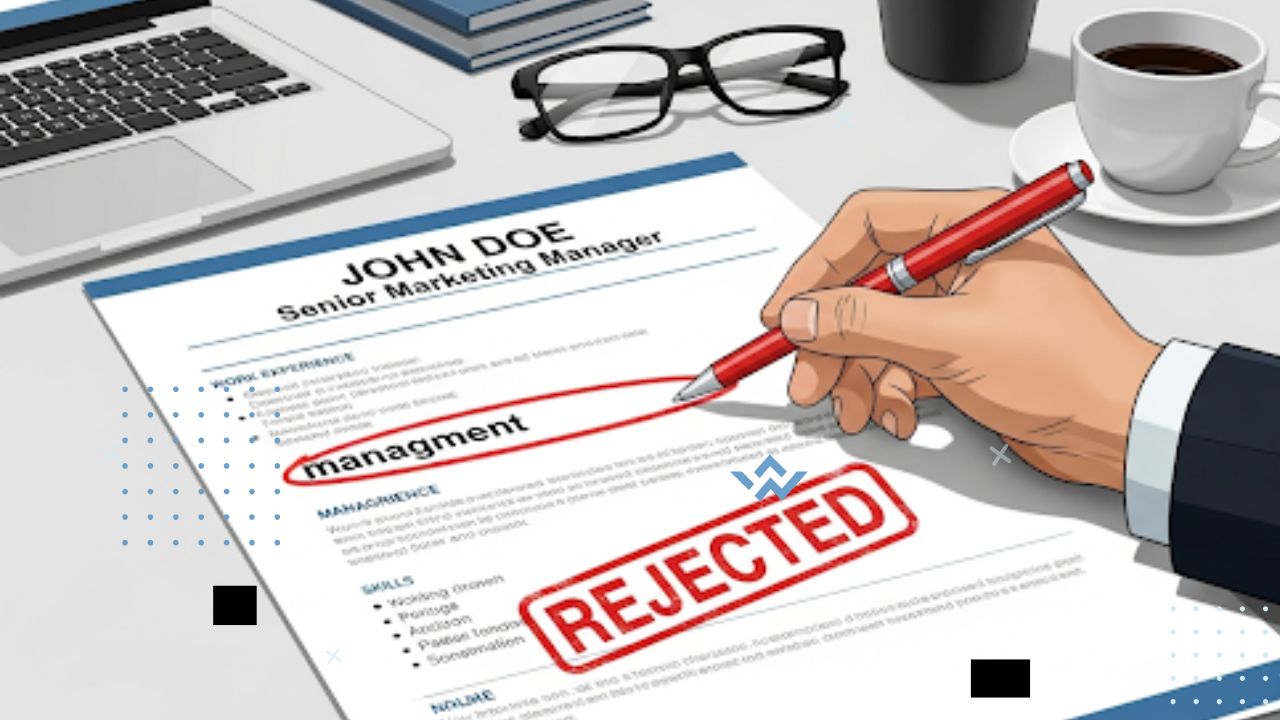
Typos scream carelessness, and 60% of recruiters reject resumes with errors.
- Mistake: Submitting resumes with spelling or grammar mistakes.
- Fix: Proofread twice, then use tools like Grammarly to catch errors.
- How: Ask a friend to review your resume for clarity and typos.
Tip: Read your resume out loud to spot awkward phrases or mistakes.
FAQs
Q: How long should a fresh grad’s resume be?
A: Keep it to one page. Focus on recent, relevant experiences like internships, projects, or certifications to make it sharp.
Q: What if I have no professional experience?
A: Highlight school projects, volunteer work, or online courses. For example, a website you built or a data analysis project shows real skills (LinkedIn, 2024).
Q: Should I include my GPA on my resume?
A: Only include it if it’s above 3.5 or the job asks for it. Otherwise, focus on skills and projects to stand out.