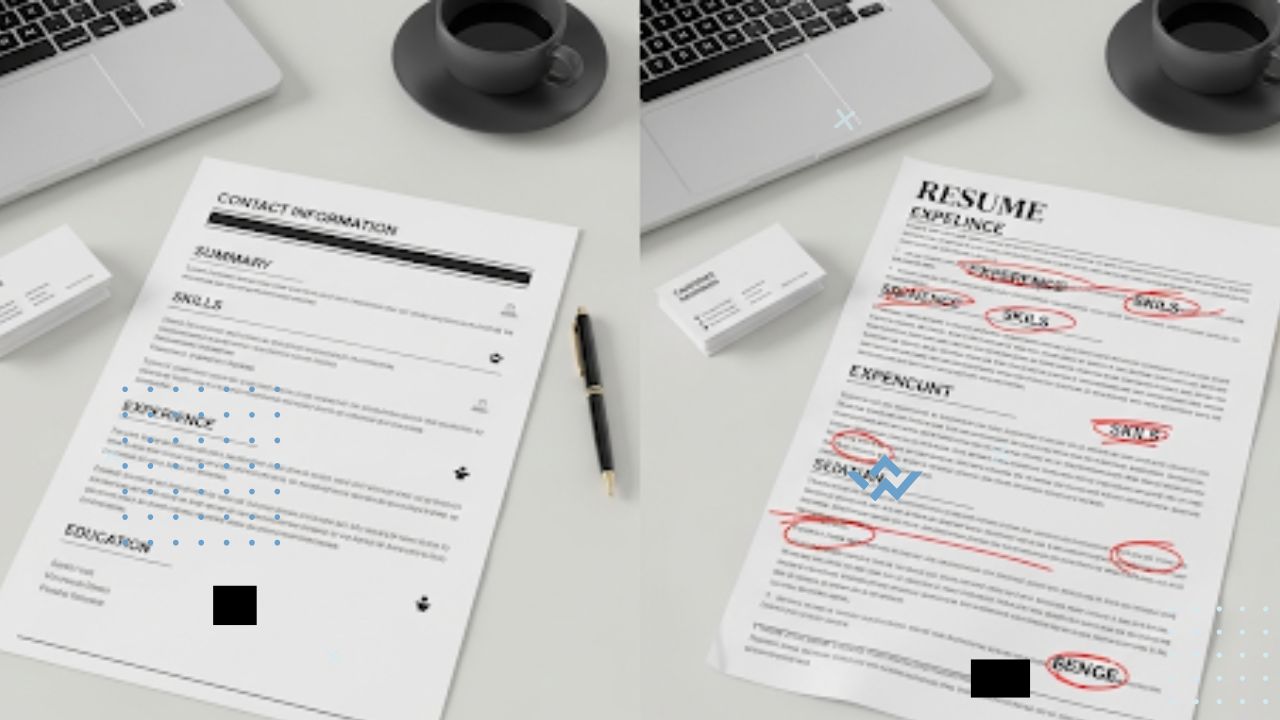
You have polished your resume added your latest job and sent it out with confidence. You feel sure that this is the one that will get you noticed. But then nothing happens. No calls. No emails. Silence.
The problem might not be your skills or your experience. Sometimes it is a hidden mistake on your resume that you do not even realize you are making. These mistakes can quietly push your application out of the running before a hiring manager gives it a second look.
Let us go through the common mistakes job seekers often overlook and how you can fix them.
Using the Same Resume for Every Job
It is easy to create one resume and send it everywhere. But hiring managers can spot a generic resume instantly. They want to see that you took time to connect your experience with their specific role.
Fix it
- Adjust your resume to highlight skills mentioned in the job description
- Put your most relevant experience at the top
- Keep a master resume but edit it for each role
Listing Job Duties Instead of Achievements
Many resumes read like a list of responsibilities. The problem is hiring managers already know what most job titles involve. What they want is proof of how you made a difference.
Fix it
- Focus on results not just tasks
- Use numbers or percentages if possible
- For example instead of saying managed social media write grew followers by 20 percent in six months
Forgetting to Update Old Information
Sometimes people keep the same resume for years and forget to remove outdated roles or skills. This makes your resume look cluttered and less focused.
Fix it
- Remove jobs from over ten years ago unless highly relevant
- Delete skills or tools no longer in use
- Make sure all dates job titles and contact information are accurate
Poor Formatting That Hurts Readability
If your resume is hard to scan it can end up in the no pile even if your experience is strong. Hiring managers often spend only seconds on each resume.
Fix it
- Use clear headings and bullet points
- Keep the design clean and simple
- Use one easy to read font size for the main text and slightly larger for headings
Overusing Buzzwords
Words like hardworking motivated or team player sound good but do not mean much without proof. Hiring managers see these so often that they barely notice them anymore.
Fix it
- Replace buzzwords with specific examples
- Show collaboration with phrases like worked with a team of five to launch a new project
- Let your results do the talking
Leaving Out Soft Skills Examples
While technical skills matter employers also want to know how you work with others. But simply listing communication or leadership is not enough.
Fix it
- Show soft skills through short examples
- For example trained two new team members or led weekly meetings to improve coordination
- This makes your soft skills real and believable
Using an Unprofessional Email
This is a small detail but it can ruin a first impression. An email like coolguy77 does not look professional.
Fix it
- Create a new email using your first and last name
- Keep it simple and professional
Making It Too Long
A resume that goes on for pages can turn off employers. They want highlights not your entire life story.
Fix it
- Keep it one page if you are newer to the workforce
- Two pages maximum for experienced professionals
- Trim down old or irrelevant jobs
Forgetting to Proofread
Typos and grammar mistakes are some of the most common hidden errors. Even one mistake can make a hiring manager think you are careless.
Fix it
- Read your resume slowly out loud
- Use online tools for a quick check
- Ask a friend to review it before sending
Quick Recap
- Tailor your resume for each job
- Highlight achievements not just duties
- Keep information current and relevant
- Use a clean and readable format
- Show proof instead of buzzwords
- Keep it short and focused
- Check contact details and proofread carefully
FAQs
1. Should I include every job I have ever had
No. Focus on the past ten years or the roles most relevant to the job you want. Hiring managers care more about recent and related experience.
2. Do I really need to customize my resume for each job
Yes. Even small changes like adjusting keywords or moving a skill higher up can make a big difference. Employers want to see that you match their role.
3. How do I know if my resume is too long
If you are early in your career it should fit on one page. If you have more experience you can go to two pages. Anything beyond that is usually too much.