In 2025, with 62% of job interviews conducted virtually (LinkedIn, 2024) and competitive job markets in high-growth sectors like tech and healthcare (facing $70 billion in Medicaid cuts, Health Affairs, 2025), managing interview anxiety is critical for success. Anxiety affects 40% of candidates, impacting performance and confidence (LinkedIn, 2024). By mastering breathing techniques, cultivating a positive mindset, and preparing thoroughly, you can approach interviews with calm and clarity. This blog provides practical strategies for managing interview anxiety, with tailored tips for professionals in Pakistan and worldwide, especially in freelancing and tech-driven fields.
Why Interview Anxiety Matters
Anxiety can undermine your ability to articulate skills and align with employer needs, with 55% of first impressions formed within the first minute of an interview (Harvard Business Review, 2025). In Pakistan, where freelancing contributes $1 billion annually (Payoneer, 2025) and IT exports reached $3.2 billion in 2024 (The Express Tribune), overcoming anxiety is key to securing opportunities in competitive global markets. Effective strategies reduce stress, boost confidence, and help you shine, whether interviewing virtually or in-person.
Strategies for Managing Interview Anxiety
1. Breathing Techniques to Stay Calm
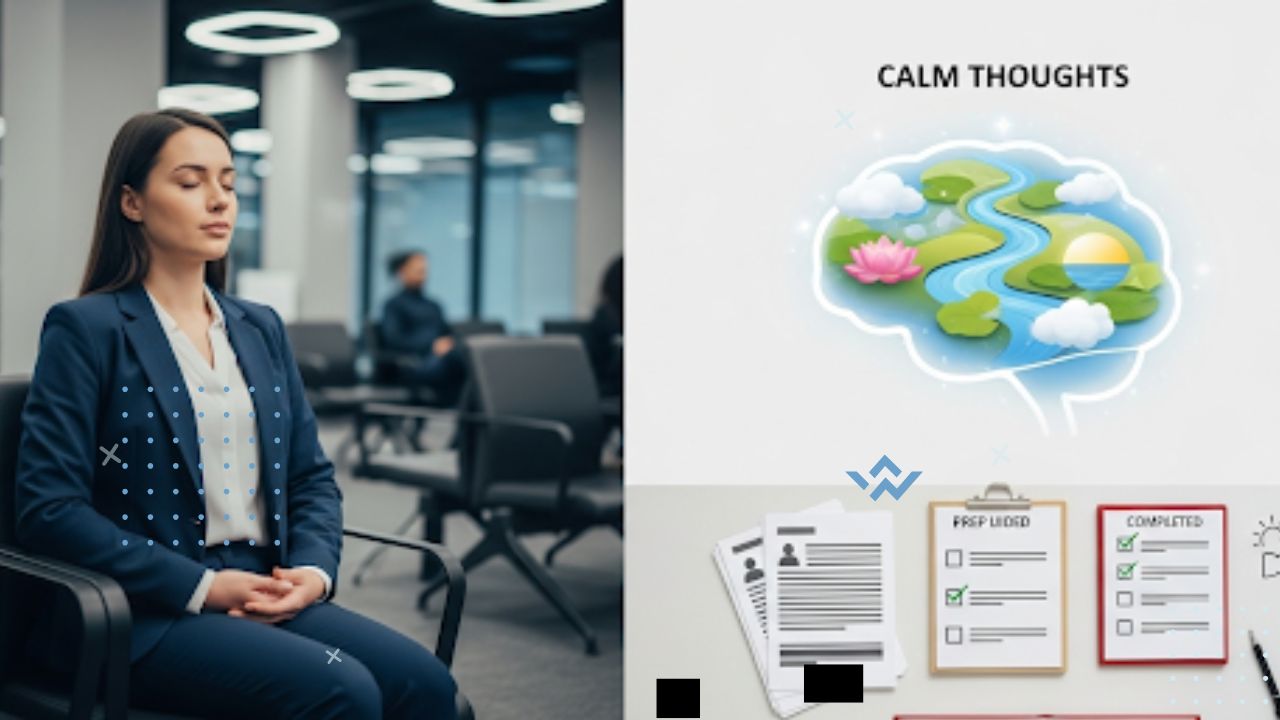
Breathing exercises regulate the nervous system, reducing anxiety by 20% during high-stress situations (Journal of Clinical Psychology, 2025). They’re quick, discreet, and effective for virtual and in-person interviews.
- 4-7-8 Technique:
- How: Inhale for 4 seconds, hold for 7 seconds, exhale for 8 seconds. Repeat 3–5 times.
- Why: Lowers heart rate and activates the parasympathetic nervous system, calming nerves.
- When: Practice 5 minutes before the interview and during breaks if anxiety spikes.
- Box Breathing:
- How: Inhale, hold, exhale, and hold again, each for 4 seconds. Repeat 4 cycles.
- Why: Used by professionals in high-pressure fields like healthcare, it improves focus by 15% (Stanford, 2025).
- When: Use during virtual interview tech checks or while waiting in-person.
- Tip: Practice daily for a week before the interview to build muscle memory, per Forbes 2025.
- Example: A Pakistani freelancer used the 4-7-8 technique before a virtual Upwork interview, reducing anxiety and securing a $1,000 UX design project (Payoneer, 2025).
2. Cultivating a Positive Mindset
A growth-oriented mindset reframes anxiety as excitement and boosts confidence, with 70% of hiring managers valuing enthusiasm (LinkedIn, 2024).
- Reframe Nerves as Energy:
- How: Tell yourself, “I’m excited to share my skills,” instead of “I’m nervous.” This shifts adrenaline into positive motivation.
- Why: Reframing reduces stress perception by 25%, per a 2025 Harvard Business Review study.
- Visualize Success:
- How: Spend 5 minutes imagining a confident interview, picturing clear answers and a positive outcome.
- Why: Visualization improves performance by 20%, per Journal of Applied Psychology 2025.
- Use Affirmations:
- How: Repeat phrases like “I am prepared and capable” or “My skills align with this role.”
- Why: Boosts self-efficacy, critical for Pakistan’s freelancers facing global competition (Payoneer).
- Tip: Write affirmations tailored to the role (e.g., “My EHR expertise adds value” for healthcare) and review them pre-interview.
- Example: A tech candidate in Lahore visualized answering AI-related questions confidently, securing a role at a fintech startup.
3. Thorough Preparation to Build Confidence
Preparation reduces anxiety by ensuring readiness, with 80% of confident candidates attributing success to practice (Forbes, 2025).
- Research the Company:
- How: Study the company’s mission, recent news (e.g., via LinkedIn or X), and challenges (e.g., healthcare’s staffing shortages, tech’s AI adoption).
- Why: Shows alignment, valued by 65% of interviewers (LinkedIn, 2024).
- Tip: In Pakistan, research local startups like Airlift to tailor responses (Dawn, 2025).
- Practice Common Questions:
- How: Rehearse answers to “Tell me about yourself” or “Why this role?” using the STAR Method (Situation, Task, Action, Result).
- Why: Structured responses reduce hesitation, improving clarity by 30% (Jobscan, 2025).
- Example: “I led a project to optimize triage, reducing wait times by 25%” (healthcare).
- Mock Interviews:
- How: Record a practice session or use a friend to simulate virtual/in-person interviews.
- Why: Identifies weaknesses in delivery, critical for 62% virtual interviews (LinkedIn).
- Tip: Use Zoom to practice camera presence and test tech setup.
- Prepare Materials:
- How: Have a tailored resume, portfolio (e.g., UX designs, data dashboards), and certifications (e.g., CISSP, BLS) ready.
- Why: Organized materials boost confidence and align with ATS keywords (Forbes, 2024).
- Tech Setup for Virtual Interviews:
- How: Test Zoom/Teams, ensure 25 Mbps internet, and use a quality webcam/microphone (Jobscan, 2025).
- Why: Avoids 30% of virtual interview glitches (Jobscan).
- Example: A Karachi-based developer practiced STAR responses for a Toptal interview, securing a $100/hour AI project (Payoneer, 2025).
Additional Tips for 2025
- Tailor for Industry: For healthcare, emphasize compliance (e.g., HIPAA); for tech, highlight tools like Python or Azure (HIMSS, TechCrunch 2025).
- Leverage Freelancing Platforms: In Pakistan, use Upwork or WorkChest to practice virtual interviews, aligning with the $3.2 billion IT export boom (The Express Tribune, 2024).
- Incorporate Cybersecurity: Use MFA and secure Wi-Fi to protect interview platforms, reducing breach risks by 50% (Gartner, 2025).
- Adapt for Cultural Nuances: In Pakistan, a respectful tone resonates (Eurasia Review, 2025); globally, adapt to directness for U.S./EU clients.
- Schedule Strategically: Plan interviews during low-stress times (e.g., morning) to minimize anxiety (Forbes, 2025).
Challenges and Considerations
- Virtual Dynamics: Camera presence can feel unnatural. Practice looking at the camera to simulate eye contact (LinkedIn, 2024).
- Time Constraints: Preparation takes time. Start 1–2 weeks early, spending 30 minutes daily (Jobscan, 2025).
- Pakistan-Specific Barriers: Internet disruptions in Pakistan (spocket.co) require backup hotspots and low-bandwidth platforms like Slack.
- Overthinking Answers: Over-preparation can lead to robotic delivery. Focus on natural responses (Harvard Business Review, 2025).
Global and Pakistan Perspectives
- North America/Europe: High demand for polished virtual presence in tech and fintech interviews (TechCrunch, 2025).
- Pakistan: Freelancers (3 million strong, Payoneer) use breathing and mindset to compete globally, leveraging platforms like Upwork (Dawn, 2025).
- ASEAN/Africa: Connectivity challenges emphasize preparation and asynchronous tools (IRENA, 2025).
Closing
Managing interview anxiety in 2025 is achievable through breathing techniques, a positive mindset, and thorough preparation. By practicing the 4-7-8 technique, reframing nerves as excitement, and researching company needs, professionals in Pakistan and worldwide can approach interviews with confidence. Tailoring strategies for virtual interviews and industry demands, like healthcare or tech, ensures success in a competitive market. Embrace these techniques to transform anxiety into opportunity and land your next role.