Work has changed forever. The days when everyone sat in the same office from nine to five are fading fast. Today, more companies are rethinking how and where their people work. You have probably heard terms like hybrid, remote-first, and blended work. But what do they actually mean, and which one is shaping the future?
What Is Hybrid Work?
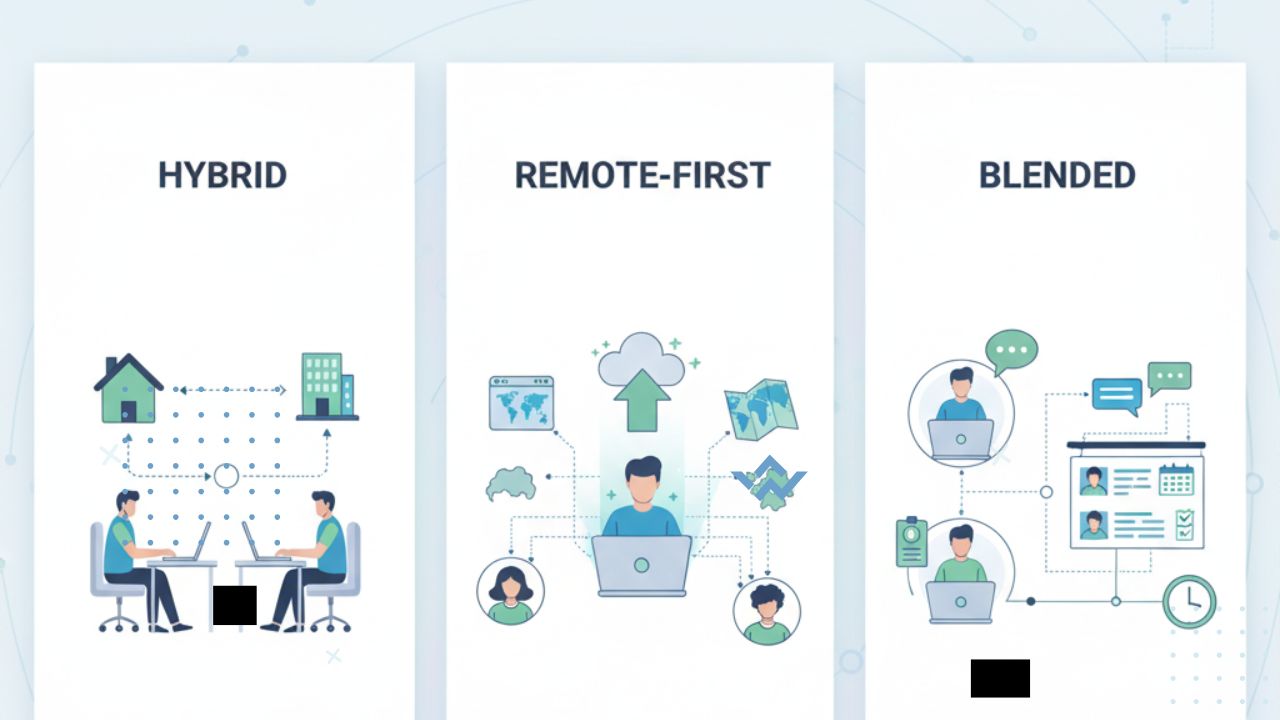
Hybrid work is a mix of office and remote work. In this model, employees split their time between home and the office. For example, someone might work from home three days a week and spend two days at the office.
Pros of Hybrid Work
- Flexibility while keeping face-to-face connections.
- Easier collaboration on team projects in the office.
- A balance of independence and company culture.
Cons of Hybrid Work
- Commuting is still part of the routine.
- Scheduling can get messy if teams are not aligned.
- Remote employees may sometimes feel left out compared to those in the office.
Hybrid work is popular because it feels like the “best of both worlds.” It works well for companies that want to maintain some office presence but also give employees freedom.
What Is Remote-First Work?
Remote-first means that the company operates mainly online. Offices may exist, but they are optional. Workflows, meetings, and systems are all designed for people working remotely. In other words, even if someone comes into the office, they use the same online tools as everyone else.
Pros of Remote-First Work
- Employees can live anywhere, not just near headquarters.
- No commuting means more time for personal life.
- Companies can hire talent globally.
Cons of Remote-First Work
- Isolation can be a challenge if social connections are weak.
- Requires strong digital tools and clear communication.
- Some employees may struggle without in-person structure.
Remote-first is especially common in tech companies, startups, and global organizations that want to tap into talent without borders.
What Is Blended Work?
Blended work is less defined but growing fast. It is a flexible mix where teams or individuals choose how they want to work. Unlike hybrid, which usually sets a fixed schedule, blended work allows more freedom. Some employees may be fully remote, while others might prefer to be in the office often.
Pros of Blended Work
- Maximum flexibility for different lifestyles.
- Employees feel trusted to manage their own schedules.
- Can adapt quickly to changes in the business environment.
Cons of Blended Work
- Harder for managers to keep everyone on the same page.
- Risk of uneven experiences between remote and in-office staff.
- Requires strong trust and clear company policies.
Real-World Examples
Imagine a design agency. They use a hybrid model by asking staff to come in every Monday and Wednesday for brainstorming. The rest of the week, employees work from home.
Now picture a software company. They are remote-first with employees spread across the United States, Europe, and Asia. Meetings are always on Zoom, and all documents live in cloud tools like Notion or Google Drive.
Which Model Is Best for the Future?
There is no single answer. The right model depends on the company, industry, and employees.
- Hybrid works best for roles where face-to-face interaction adds real value.
- Remote-first is powerful for companies that want global reach and flexibility.
- Blended gives the most freedom but needs trust and strong leadership to work smoothly.
What matters most is clear communication and fair treatment. Whichever model is chosen, all employees should feel equally included, supported, and valued.
Tips for Succeeding in Any Model
- Stay Connected. Use video calls, chat apps, or quick check-ins to avoid feeling isolated.
- Set Boundaries. Keep clear work hours so your job does not take over your home life.
- Use Tools Wisely. Apps like Slack, Notion, and Trello help keep teams aligned.
- Speak Up. Share what works for you with your manager. Good communication solves most problems.
- Keep Learning. New models bring new challenges, so be open to adjusting your habits.
Final Thoughts
The future of work is flexible. Hybrid, remote-first, and blended models are all shaping how we get things done. Each has strengths and challenges, but they share one truth. Work is no longer tied to a single desk in a single office.
For employees, this means more freedom to choose how you want to work. For companies, it means rethinking how to support and connect teams. The future will not be about one model winning over the others. It will be about finding balance and building systems that let people thrive.
FAQs
1. What is the main difference between hybrid and blended work?
Hybrid usually means set days at the office and set days at home. Blended is more flexible, letting employees decide what works best for them.
2. Do employees prefer remote-first work?
Many do because it allows freedom and saves commuting time. But some people still prefer the social side of office life, so preferences vary.
3. Which model saves companies the most money?
Remote-first often reduces costs because companies spend less on office space and utilities. However, savings depend on how each company sets up its policies and tools.