In 2025, with 62% of job interviews conducted virtually and applicant tracking systems (ATS) used by 75% of employers, per a 2024 LinkedIn report, tailoring your resume with keywords from the job description is essential to stand out in a competitive market. This is particularly critical in high-demand fields like healthcare, grappling with staffing shortages amid $70 billion in Medicaid cuts, and tech, with a 32.1% AI market CAGR through 2030, per IndexBox. Keywords align your resume with employer needs and ATS algorithms, increasing your chances of landing an interview. This blog provides a step-by-step guide to tailoring your resume effectively, with practical tips and examples for professionals in any industry.
Step-by-Step Guide to Tailoring Your Resume
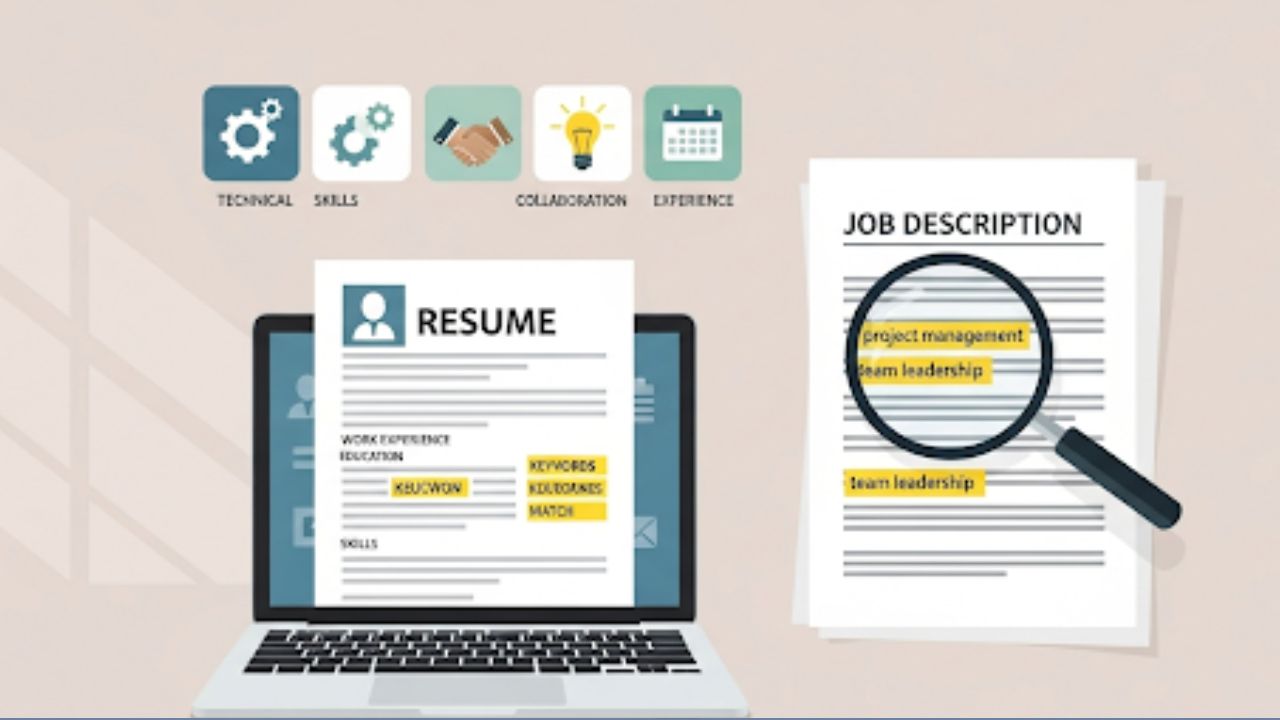
1. Analyze the Job Description
- What to Do: Carefully read the job posting to identify key skills, qualifications, and responsibilities. Highlight recurring terms, technical skills, and industry-specific jargon.
- Why It Works: Pinpoints what the employer values most, allowing you to mirror their language.
- Tip: Look for verbs (e.g., “manage,” “develop”) and nouns (e.g., “EHR,” “Python”) that reflect core duties or tools.
- Example (Healthcare Job): A posting for a nurse might emphasize “patient care,” “HIPAA compliance,” “triage,” and “EHR proficiency.”
- Example (Tech Job): A software engineer role might list “machine learning,” “cloud computing,” “Python,” and “Agile methodology.”
2. Identify and Prioritize Keywords
- What to Do: Create a list of 10–15 keywords, prioritizing those repeated or bolded in the job description. Include technical skills, certifications, and soft skills (e.g., “team collaboration”).
- Why It Works: Ensures your resume aligns with ATS algorithms and hiring manager expectations.
- Tip: Use exact phrases from the job description to match ATS parsing logic, but avoid overstuffing.
- Example (Healthcare): Keywords like “patient outcomes,” “telehealth,” “infection control,” and “BLS certification.”
- Example (Tech): Keywords like “AI development,” “Azure,” “DevOps,” and “problem-solving.”
3. Integrate Keywords Naturally
- What to Do: Embed keywords in your resume’s summary, work experience, skills section, and certifications. Use them in context to describe achievements and responsibilities.
- Why It Works: ATS and humans both read for context, so keywords must flow naturally to maintain readability.
- Tip: Vary keyword formats (e.g., “developed AI models” vs. “AI development”) to cover synonyms while staying authentic.
- Example (Healthcare, Work Experience): “Streamlined triage processes, reducing patient wait times by 25% while ensuring HIPAA compliance and leveraging EHR systems.”
- Example (Tech, Work Experience): “Developed machine learning models using Python, improving fraud detection accuracy by 30% in an Agile DevOps environment.”
4. Optimize for ATS
- What to Do: Use standard section headers (e.g., “Work Experience,” “Skills”) and avoid graphics, tables, or complex formatting that ATS may misread.
- Why It Works: ATS systems parse text-based resumes more effectively, increasing your chances of passing the initial screen.
- Tip: Use a clean, ATS-friendly format like a single-column Word or PDF document, per a 2025 Jobscan guide.
- Example: List skills like “cloud computing” or “patient care” in a dedicated section for easy ATS detection.
5. Highlight Measurable Achievements
- What to Do: Pair keywords with quantifiable results to demonstrate impact, aligning with the STAR Method (Situation, Task, Action, Result).
- Why It Works: Metrics make your resume compelling to hiring managers, showing tangible contributions.
- Tip: Use numbers or percentages (e.g., “cut costs by 20%” or “improved outcomes by 15%”) to reinforce keywords.
- Example (Healthcare): “Implemented telehealth protocols, enhancing patient access by 20% and maintaining HIPAA compliance.”
- Example (Tech): “Led cloud migration to Azure, reducing infrastructure costs by 15% and accelerating deployment cycles.”
6. Tailor for Each Application
- What to Do: Customize your resume for every job, adjusting keywords to match each description’s unique requirements.
- Why It Works: Shows precision and commitment, increasing relevance for specific roles.
- Tip: Keep a master resume with all experiences and create tailored versions, spending 15–20 minutes per application.
- Example: For a healthcare IT role, emphasize “EHR integration” and “cybersecurity”; for an AI developer role, highlight “machine learning” and “Python.”
Sample Tailored Resume Sections
Healthcare: Nurse Role
Job Description Keywords: Patient care, HIPAA compliance, triage, EHR proficiency, team collaboration.
Resume Summary: “Dedicated registered nurse with 5 years of experience delivering high-quality patient care in fast-paced rural hospitals. Skilled in triage and EHR proficiency, I streamlined processes to reduce wait times by 25% while ensuring HIPAA compliance and fostering team collaboration.”
Work Experience: “Led triage optimization, integrating EHR systems to improve patient outcomes by 15% and maintain strict HIPAA compliance.”
Tech: Software Engineer Role
Job Description Keywords: Machine learning, Python, cloud computing, Agile methodology, problem-solving.
Resume Summary: “Innovative software engineer with 3 years of experience developing machine learning solutions using Python in cloud computing environments. Delivered Agile projects that enhanced system performance by 30%, leveraging strong problem-solving skills.”
Work Experience: “Designed machine learning models in Python, deployed on Azure, reducing error rates by 30% in an Agile methodology framework.”
Additional Tips
- Use Job-Specific Tools: Platforms like Jobscan or Resunate analyze your resume against job descriptions, suggesting keyword optimizations.
- Incorporate Soft Skills: Include keywords like “communication” or “leadership” if emphasized, but back them with examples (e.g., “led a team of 10”).
- Stay Authentic: Avoid keyword stuffing, which ATS flags as spam. Ensure every keyword reflects your actual skills or experience.
- Update for Trends: In 2025, include emerging terms like “ambient intelligence” for healthcare or “GPT-5 proficiency” for tech, per HealthTech Magazine and TechCrunch.
- Proofread Carefully: Errors can undermine credibility, especially for roles requiring precision, like healthcare compliance or coding.
Challenges and Considerations
- Over-Optimization: Keyword stuffing can make your resume unreadable or trigger ATS rejection. Balance keywords with natural language.
- Limited Experience: New professionals can use academic projects or volunteer work to incorporate keywords, e.g., “developed Python scripts” from a course.
- Time Constraints: Tailoring takes time, but templates and ATS tools streamline the process, per Forbes 2024.
- Industry Nuances: Healthcare roles may prioritize compliance keywords, while tech roles emphasize technical stacks, requiring careful analysis.
The Bigger Picture
In 2025, tailoring your resume with job description keywords is a necessity, not a luxury, given ATS dominance and competitive markets. For healthcare professionals navigating budget cuts or tech workers leveraging AI advancements, a keyword-optimized resume ensures visibility and alignment with employer needs. By analyzing job descriptions, integrating keywords naturally, and showcasing measurable results, you can bypass digital filters and impress hiring managers.