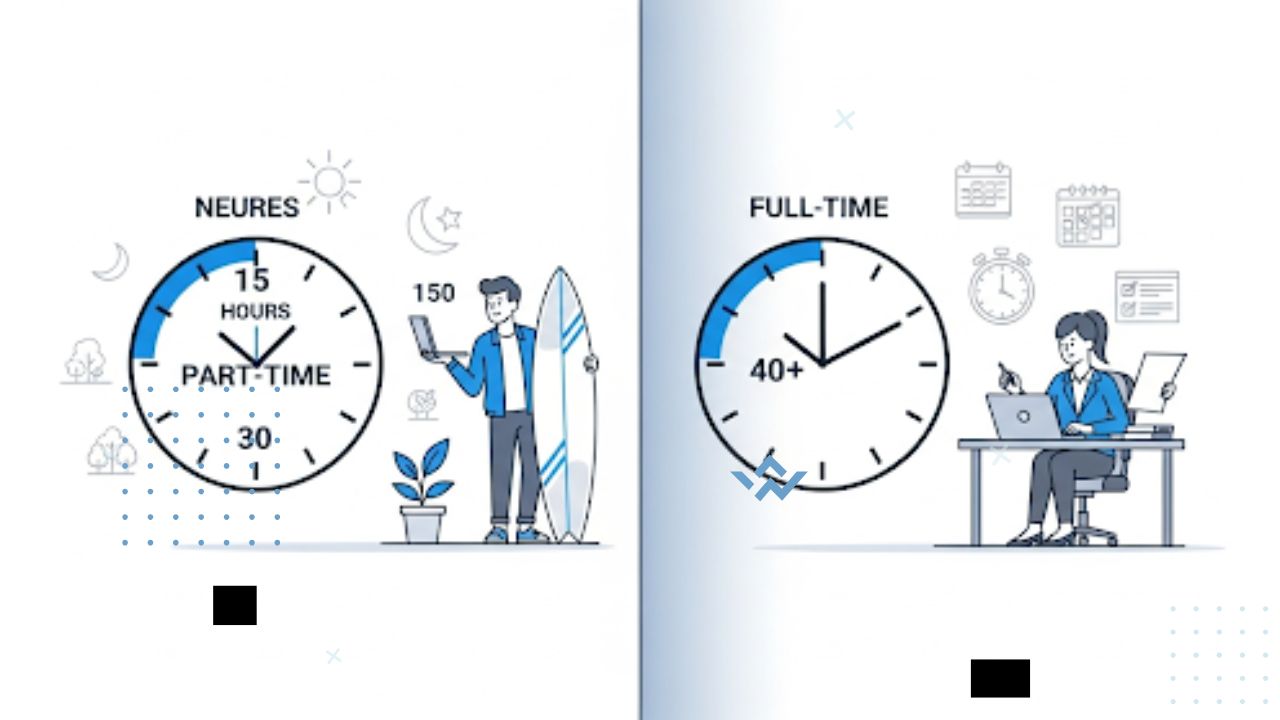
If you have ever searched for a job, you have probably noticed that some are listed as part-time and others as full-time. But here’s the catch: the line between the two is not always crystal clear. Some people think of part-time as anything under 40 hours a week, while others believe it is closer to 20 or 30. Employers also set their own definitions, which can make it even more confusing.
So, what really counts as part-time or full-time work in today’s world? Let’s break it down in simple terms.
What Does Full-Time Work Mean?
Traditionally, a full-time job has been defined as working 40 hours per week. This usually means eight-hour shifts, five days a week. Many employers still stick to this standard.
But in reality, full-time hours can vary. For example:
- Some companies consider 35 hours per week as full-time.
- Others may expect up to 45 hours depending on the role or industry.
- Government agencies like the U.S. Department of Labor often use 40 hours as the general benchmark.
When you are working full-time, you are also more likely to receive benefits such as health insurance, paid leave, and retirement plans. That is why full-time jobs are often seen as more stable.
What Counts as Part-Time Work?
Part-time work usually means working fewer than 30 to 35 hours per week. The exact number depends on the employer. Some companies might call 25 hours part-time, while others may set the cutoff at 30.
For example:
- A retail worker might work 20 hours across four shifts.
- A college student might do 15 hours a week at a cafe.
- A parent balancing family life may choose 25 hours to stay flexible.
The key is that part-time jobs allow flexibility but usually come with fewer benefits than full-time positions.
Why Employers Define It Differently
Here’s the tricky part: there is no single law that clearly defines full-time versus part-time for every employer. Instead, companies set their own rules based on their needs.
Some factors that influence the definition include:
- Industry standards – For example, healthcare workers often have longer shifts but fewer days.
- Company size – Smaller companies may label roles differently than large corporations.
- Legal or benefit rules – Some countries require employers to provide benefits if workers cross a certain number of hours.
This is why it’s always important to ask an employer what they consider full-time or part-time before accepting a job.
Benefits and Drawbacks of Full-Time Work
Benefits of full-time jobs:
- Steady income and predictable hours
- Health insurance and paid vacation (in most cases)
- Opportunities for growth and promotions
Drawbacks of full-time jobs:
- Less flexibility with schedule
- Longer hours can affect work-life balance
- Harder to juggle with school or family responsibilities
Benefits and Drawbacks of Part-Time Work
Benefits of part-time jobs:
- Flexible schedules that fit school or family needs
- Less stress and time commitment compared to full-time
- A chance to gain experience without overworking
Drawbacks of part-time jobs:
- Lower income
- Fewer or no benefits like health coverage
- Less job security or growth opportunities
How Many Hours Really Separate Part-Time from Full-Time?
Here’s a simple way to think about it:
- Full-time: 35 to 40+ hours per week
- Part-time: Anything less than 30 to 35 hours per week
But remember, the exact number can change depending on your employer or country.
Which Option Is Right for You?
When choosing between part-time and full-time, think about:
- Your financial needs
- Your lifestyle and family responsibilities
- Your career goals and long-term plans
- Whether benefits like insurance and paid leave matter to you right now
There is no right or wrong choice. What matters is picking the option that supports your current stage of life.
Final Thoughts
At the end of the day, part-time versus full-time comes down to hours and benefits. Full-time usually means around 40 hours a week with added stability and perks. Part-time is anything under 30 to 35 hours, offering flexibility but with fewer benefits.
Neither option is “better” than the other. It depends on your goals, needs, and lifestyle. Whether you’re a student, parent, or someone building a career, understanding the difference will help you make the best decision for yourself.
Questions and Answers
1. Is 32 hours considered full-time or part-time?
It depends on the employer. Some companies count 32 hours as full-time, while others label it part-time. Always check with your employer.
2. Can part-time employees get benefits?
Yes, but it is less common. Some companies offer benefits to part-time staff, but most only provide them to full-time employees.
3. What is the maximum part-time hours you can work?
There is no fixed limit. In most places, working fewer than 30 to 35 hours per week is considered part-time.