If you’ve ever searched for part-time jobs, you’ve probably noticed one thing: the hours aren’t always the same. Some jobs ask for 10–15 hours a week, while others want you for 30 hours. So what actually counts as part-time? And how do you know if it’s the right fit for your schedule?
Let’s break it down in simple terms so you know what to expect before applying or saying yes to a part-time role.
What Counts as a Part-Time Job?
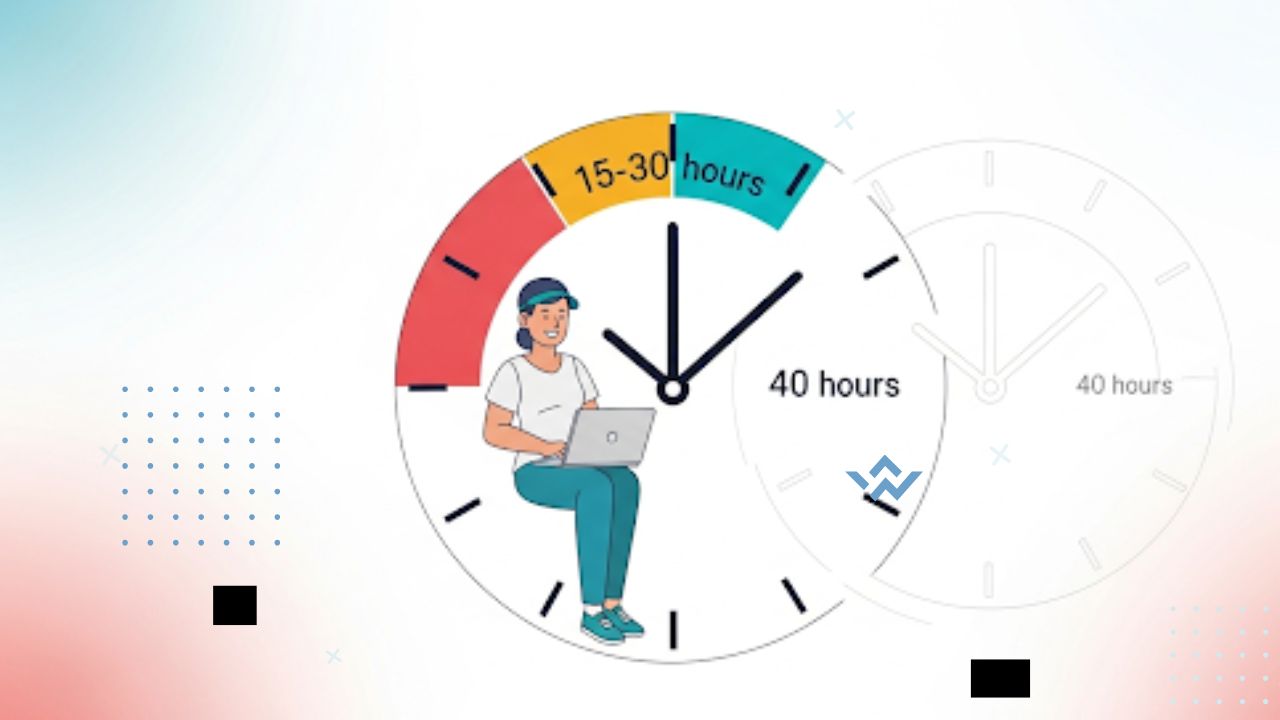
In most cases, a part-time job means working fewer hours than a standard full-time job. In the United States, full-time is usually considered around 35–40 hours per week. Anything less than that usually falls into the part-time category.
But here’s the catch: there’s no single, official definition. Employers set their own expectations, and different industries have different norms. For example:
- A retail job might consider 20–25 hours per week part-time.
- A restaurant job could give you 15–30 hours, depending on shifts.
- An office-based part-time role might be 20 hours per week, often split into 4–5 shorter days.
Typical Part-Time Hour Ranges
While it varies, here are the most common ranges you’ll see:
- 10–20 hours/week → Great for students, parents, or people with another main job.
- 20–30 hours/week → Common for roles that need more consistent help but not full-time.
- Up to 35 hours/week → Some jobs classify this as part-time, even though it feels close to full-time.
If you see a listing for “part-time” but it’s 35 hours, don’t be surprised it’s still less than 40, which is the cutoff many employers use.
Why Do Hours Vary So Much?
There are a few reasons why part-time hours aren’t the same everywhere:
- Business needs: A coffee shop may only need you during busy morning hours, while a warehouse may need evening shifts.
- State laws: Some states have rules about when part-time crosses into full-time, especially when it comes to benefits.
- Company policies: One company may cap part-time at 25 hours, while another stretches it to 35.
Real-world example: I once knew someone who worked “part-time” at a grocery store for 34 hours a week. Meanwhile, another friend worked part-time at a library for just 12 hours a week. Both were technically correct!
Part-Time vs. Full-Time: The Key Differences
It’s not just about hours. The differences also show up in pay structure and benefits.
- Full-time jobs usually come with benefits like health insurance, paid time off, and retirement contributions.
- Part-time jobs may or may not include benefits. Some big companies (like Starbucks or Costco) offer limited benefits to part-timers, but many don’t.
That’s why some people choose to combine two part-time jobs instead of one full-time role more flexibility, but usually fewer benefits.
Is Part-Time Right for You?
A part-time job can be a perfect fit if:
- You’re a student balancing classes.
- You’re a parent who wants flexible hours.
- You already have another job and want extra income.
- You’re exploring a new field without fully committing.
But keep in mind: if you need stable income and benefits, full-time may be a better choice.
How to Know Your Expected Hours Before Starting
The best way to avoid surprises is to ask upfront. Before accepting a part-time role, ask questions like:
- “How many hours a week is this position usually scheduled for?”
- “Is the schedule consistent, or does it change week to week?”
- “Is there a maximum number of hours I can work?”
This way, you’ll know whether the job truly fits your lifestyle.
Final Give up
So, how many hours is a part-time job? The short answer: anything less than 35–40 hours per week. The long answer: it depends on the employer, the type of work, and even the state you live in.
If you’re considering a part-time job, focus less on the label and more on the actual hours and benefits being offered. That way, you’ll know exactly what you’re signing up for and whether it’s the right fit for you.
Q and A
1. Can a part-time job turn into full-time?
Yes! Many employers hire part-timers first and then offer full-time roles once they see you’re a good fit. If that’s your goal, let your manager know you’re open to more hours.
2. Do part-time jobs offer benefits?
Not always. Smaller companies often don’t, but some larger employers (like Starbucks, Amazon, or UPS) do provide limited benefits to part-timers. Always ask before accepting the job.
3. Is 30 hours a week considered part-time?
Yes, in most cases. While 30 hours is close to full-time, many companies still consider it part-time since it’s under the 35–40 hour range.