Artificial Intelligence (AI) is everywhere these days from chatbots that answer customer questions to self-driving cars that are being tested on our roads. With so much change happening so fast, it’s natural to wonder: “Will my job be replaced by AI?”
The truth is, while AI is automating some roles, it’s also creating new opportunities especially in jobs that are hard for machines to fully take over. These are often called AI-resistant jobs. In 2025 and beyond, people who understand which careers are more secure will have a big advantage in planning their future.
What Are AI-Resistant Jobs?
AI-resistant jobs are roles that machines and algorithms struggle to replace. Why? Because these jobs require:
- Human creativity (something AI can’t truly replicate)
- Emotional intelligence (understanding people on a deeper level)
- Hands-on work that requires flexibility and adaptability
- Complex decision-making where human judgment is essential
In short, these are the kinds of jobs where the human touch matters most.
AI-Resistant Jobs in 2025
Here are some of the careers standing strong even as AI grows smarter:
1. Healthcare Professionals
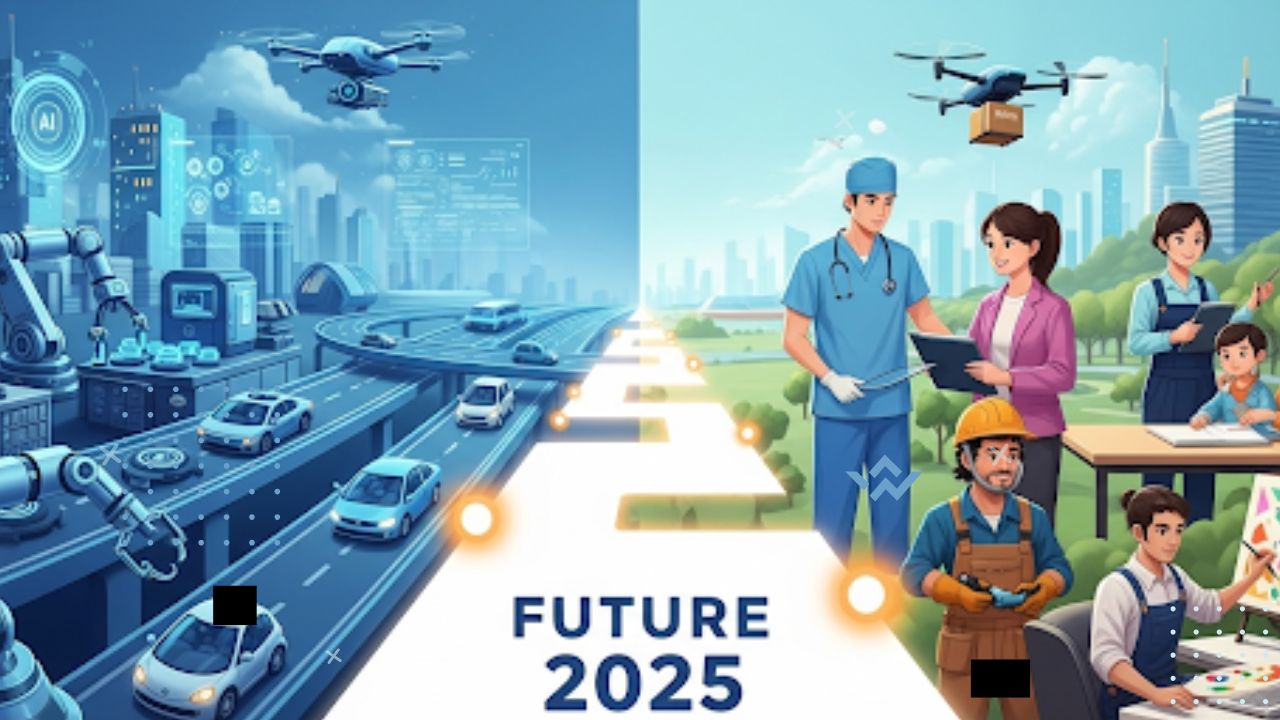
Doctors, nurses, therapists, and caregivers are in high demand. AI can help diagnose or suggest treatments, but it can’t hold a patient’s hand, give reassurance, or provide bedside care. Compassion and human connection will always matter in healthcare.
2. Skilled Trades
Electricians, plumbers, welders, and mechanics are safe bets. These roles require adaptability, problem-solving, and physical presence. You can’t outsource a leaky pipe or a faulty electrical system to a robot.
3. Teachers and Educators
AI can offer online lessons, but great teachers do more than pass on knowledge. They inspire, motivate, and adapt to each student’s needs. That human spark is something machines can’t replicate.
4. Creative Professionals
Writers, designers, artists, marketers, and performers bring imagination to the table. While AI can generate content, humans add originality, humor, and personal stories that connect with audiences.
5. Mental Health and Social Workers
Therapists, counselors, and social workers rely on empathy, trust, and real-life experience. AI can provide data-driven support, but healing conversations require a human ear and heart.
6. Leadership and Management Roles
AI can analyze numbers, but leadership requires vision, communication, and emotional connection with teams. Guiding people through challenges is a skill only humans can master.
7. Entrepreneurs and Innovators
Starting a business or creating new ideas means thinking outside the box. While AI can assist, true innovation often comes from lived experience, curiosity, and risk-taking.
Why AI Can’t Replace Human-Centered Work
Imagine walking into a hospital where a robot tells you that you’re sick. Or a classroom where your teacher is a chatbot. Sounds cold and impersonal, right? That’s because jobs that rely on trust, empathy, and creativity simply can’t be replaced by AI.
Even in industries where AI is being adopted, human workers will still play a vital role in making decisions, building relationships, and solving unexpected problems.
How to Secure Your Future in 2025
The good news is you don’t have to fear AI you can future-proof your career by focusing on skills that keep you valuable no matter what. Here’s how:
1. Focus on Human Skills
- Communication
- Emotional intelligence
- Creativity
- Critical thinking
These are areas where humans shine, and AI struggles.
2. Learn to Work With AI, Not Against It
Instead of worrying about being replaced, learn how to use AI as a tool. For example:
- Marketers can use AI for data analysis but still create unique campaign ideas.
- Teachers can use AI for lesson planning but focus on student engagement.
3. Stay Adaptable
The job market will keep changing. Stay open to learning new skills, whether through online courses, certifications, or workshops.
4. Invest in Lifelong Learning
Fields like healthcare, trades, and creative industries will evolve. Workers who keep learning will always have an edge.
FAQs
1. What jobs are most at risk from AI?
Jobs with repetitive, predictable tasks like data entry, telemarketing, and some factory roles are the most vulnerable to automation.
2. Can AI replace creative jobs like writing or art?
AI can generate content, but human creativity, storytelling, and originality can’t be fully replaced. People connect more with real experiences and emotions.
3. How can I prepare for an AI-driven job market?
Focus on human skills, stay adaptable, and learn how to use AI as a tool rather than seeing it as competition. Continuous learning is key.
Final Thoughts
AI is here to stay, but that doesn’t mean humans are being pushed aside. If anything, it highlights just how valuable human skills truly are.
By focusing on creativity, empathy, adaptability, and leadership, you can build a career that stands strong in 2025 and beyond. Remember: AI can assist, but it can’t replace the human heart, imagination, and drive to make a difference.