Remote work has changed the way we live and work. It gives us freedom, flexibility, and the comfort of working from home. But it also comes with hidden challenges. One of the biggest is mental wellness.
When people work from home, it is easy to feel isolated, stressed, or even burned out. Without the casual chats in the office or the energy of a team around you, work can feel lonely. That is why mental wellness programs are becoming just as important as productivity tools.
Why Mental Wellness Matters in Remote Work
Remote teams may look productive on paper, but behind the screen many employees deal with stress. Deadlines, lack of face-to-face support, and blurred boundaries between work and home life all add pressure.
If ignored, this stress can lead to poor focus, low motivation, and even health problems. Companies that take care of mental wellness see happier employees, better teamwork, and stronger results. In short, when people feel good, they work better.
Challenges Remote Workers Face
1. Isolation and Loneliness
Without office interactions, people can feel cut off from their team. This can affect mood and motivation.
2. Work-Life Balance
It is hard to switch off when your home is also your office. Many workers end up working longer hours without realizing it.
3. Burnout
Constant screen time, back-to-back video calls, and the pressure to stay available can quickly lead to burnout.
4. Lack of Support
In an office, managers can notice when someone is stressed. In remote setups, these signs are harder to spot.
Apps That Support Mental Wellness
Technology is not only for productivity. It can also be a powerful tool for mental health. Here are some apps that remote workers can use daily.
1. Headspace
Great for guided meditation and mindfulness exercises. Even ten minutes a day can reduce stress and improve focus.
2. Calm
Perfect for relaxation, sleep stories, and breathing exercises. It helps remote workers unwind after a busy day.
3. Moodfit
A mental health fitness app that tracks mood, sets daily goals, and offers helpful exercises.
4. Slack Add-Ons
Some tools inside Slack remind teams to take breaks, stretch, or check in with how they are feeling.
5. Happify
This app focuses on positivity with activities and games that improve mental resilience.
Routines That Really Work
Apps are helpful, but real change comes from daily habits. Building simple routines can keep stress low and mental health strong.
Morning Start Ritual
Begin the day with something calming, like a five-minute meditation, a short walk, or even writing down three things you are grateful for.
Regular Breaks
Use the Pomodoro method or set reminders to step away from your screen. A five-minute stretch or a cup of tea can recharge your mind.
Clear Boundaries
Set work hours and stick to them. When the day ends, close your laptop and shift into personal time.
Team Check-Ins
Have weekly non-work chats with your team. A casual video call or fun online activity can make people feel connected.
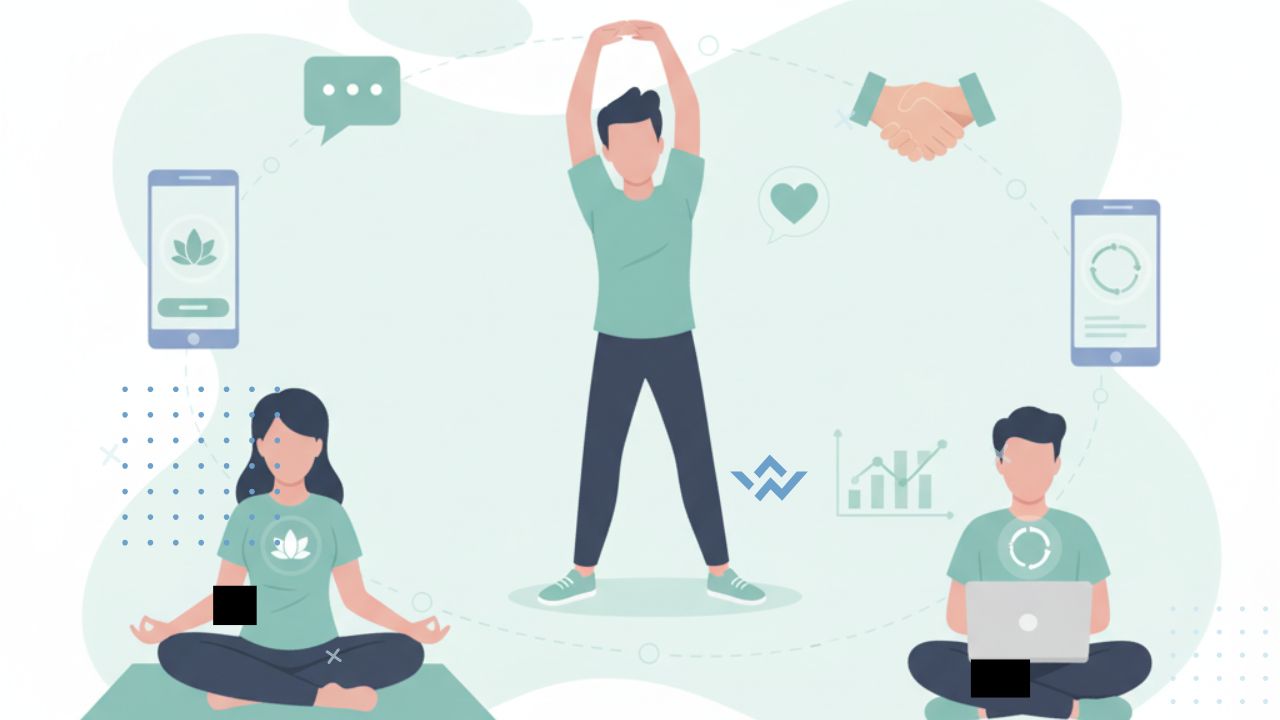
Physical Movement
Encourage simple workouts, yoga, or even walking meetings. Moving your body supports both physical and mental wellness.
Building a Culture of Wellness
Mental wellness is not a one-time activity. It works best when it becomes part of company culture. Leaders should talk openly about stress, encourage time off, and model healthy routines.
When wellness is a shared priority, employees feel safe to speak up, ask for help, and take care of themselves. This creates stronger, happier, and more loyal teams.
Final Thoughts
Remote work is here to stay. While it brings many benefits, mental wellness must not be overlooked. By combining useful apps with healthy routines, both individuals and teams can thrive.
Remember, wellness is not about doing everything perfectly. It is about creating space for balance, connection, and rest in your workday. When mental health is supported, remote teams become not only productive but also truly sustainable.
FAQs
1. How can managers support mental wellness in remote teams?
Managers can check in regularly, encourage breaks, provide access to wellness apps, and create a culture where mental health is valued and discussed openly.
2. Do wellness apps really help remote workers?
Yes, wellness apps provide tools for stress relief, mindfulness, and better sleep. They are not a replacement for professional care but can be very helpful for daily support.
3. What is the simplest routine to improve mental wellness while working remotely?
Start with regular breaks and a clear end to your workday. These two simple habits reduce stress and help create balance between work and personal life.