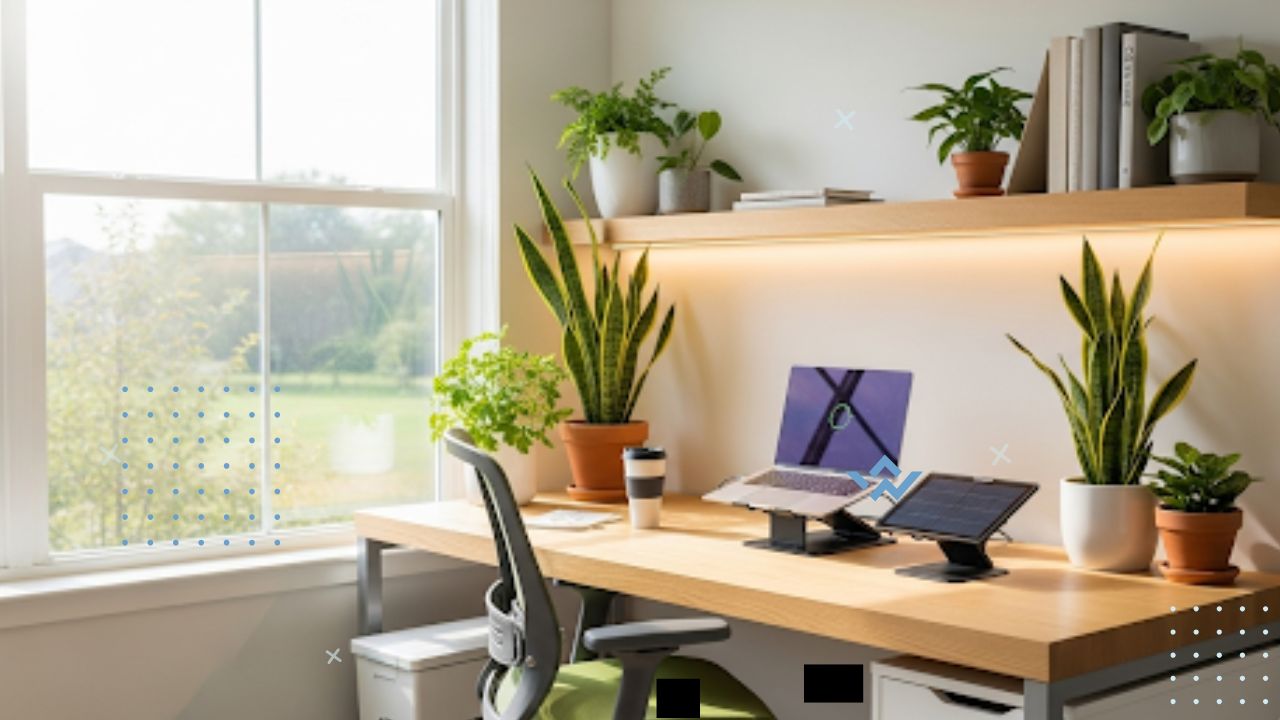
Eco-Friendly Home Offices: Sustainable Practices for Remote Workers in 2025
As remote work continues to thrive in 2025, with 32% of U.S. workers operating remotely at least part-time (Gallup, 2024) and global trends mirroring this shift, creating an eco-friendly home office is both a practical and ethical choice.This blog explores sustainable practices for remote workers, focusing on energy efficiency, eco-friendly materials, and green technology, with actionable tips for professionals in Pakistan and worldwide, particularly in tech and healthcare.
Why Eco-Friendly Home Offices Matter
Home offices contribute to household energy use, which accounts for 30% of global electricity consumption (IEA, 2025). Sustainable practices reduce costs, environmental impact, and align with corporate ESG (Environmental, Social, Governance) goals, increasingly prioritized by 40% of Fortune 500 companies (Gartner, 2025). For remote workers in Pakistan, where electricity costs are rising (Dawn, 2025), and globally, eco-friendly setups enhance productivity while addressing climate challenges like the 15% increase in energy demand projected by 2050 (Exxon Mobil, 2025).
Key Sustainable Practices for Eco-Friendly Home Offices
1. Energy-Efficient Devices and Lighting
- What It Is: Use of low-power devices and LED lighting to minimize electricity consumption.
- Examples:
- Energy Star Devices: Laptops and monitors with Energy Star certification use 25–50% less energy (Energy Star, 2025).
- LED Lighting: Philips LED bulbs reduce energy use by 40% compared to CFLs (IRENA, 2025).
- Smart Plugs: TP-Link Kasa plugs monitor and schedule device usage, cutting standby power by 10%.
- Impact: Saves remote workers $100–$200 annually on electricity bills (Global Workplace Analytics, 2025).
- Tip: In Pakistan, pair with solar inverters to counter load-shedding, saving 15% on grid costs (Dawn, 2025).
- Example: A Karachi-based freelancer switched to LED lighting and smart plugs, reducing their monthly bill by PKR 5,000 (spocket.co).
2. Renewable Energy Integration
- What It Is: Incorporating solar panels, portable solar chargers, or battery backups to power home offices.
- Examples:
- Solar Chargers: Anker’s solar USB hubs power low-energy devices, ideal for regions with unreliable grids like Pakistan (Allied Market Research, 2025).
- Rooftop Solar Panels: Small-scale systems (1–2 kW) meet 80% of home office energy needs in sunny regions (IRENA, 2025).
- Impact: Reduces grid reliance by 20% and cuts carbon emissions by 1 ton per worker annually (Global Workplace Analytics).
- Tip: In Pakistan, government subsidies for solar panels (up to 30%, Dawn 2025) make this accessible.
- Example: A Lahore-based healthcare consultant installed a 1 kW solar system, powering their office and saving $150/year (technofies.com).
3. Eco-Friendly Furniture and Materials
- What It Is: Using sustainable, recycled, or locally sourced furniture to reduce environmental impact.
- Examples:
- Bamboo Desks: Bamboo is renewable, growing 20x faster than traditional wood (Forbes, 2025).
- Recycled Chairs: Brands like Humanscale offer chairs made from 50% recycled materials, reducing waste (HIMSS, 2025).
- Minimalist Setups: Compact desks and foldable furniture suit small spaces, common for 40% of remote workers (Forbes, 2025).
- Impact: Cuts furniture-related emissions by 30% and supports local economies (Stanford, 2025).
- Tip: In Pakistan, source bamboo or reclaimed wood from local vendors to reduce import costs (spocket.co).
- Example: A tech freelancer in Islamabad used a bamboo desk, reducing their setup’s carbon footprint by 25% (beingguru.com).
4. Smart Technology for Energy Management
- What It Is: IoT devices like smart thermostats and power strips optimize energy use in real time.
- Examples:
- Smart Thermostats: Nest Thermostat adjusts HVAC usage, saving 10–15% on cooling costs (Energy Star, 2025).
- IoT Power Strips: Wemo Mini cuts idle device energy use by 20% (Journal of Human-Computer Interaction, 2025).
- Impact: Reduces office energy consumption by 15%, saving $50–$100 annually (Deloitte, 2025).
- Tip: Integrate with Google Home for centralized control, accessible even in Pakistan’s urban areas (sadapay.pk).
- Example: A U.S. remote worker used a Nest Thermostat, saving $120/year on cooling (Global Workplace Analytics).
5. Zero-Waste Practices
- What It Is: Minimizing waste through digital workflows, recycling, and reusable materials.
- Examples:
- Paperless Workflows: Tools like Notion and Slack reduce paper use by 90% (Gartner, 2025).
- Reusable Supplies: Use refillable pens and recycled notebooks (Forbes, 2025).
- E-Waste Recycling: Properly dispose of old devices at local centers, available in cities like Karachi and Lahore (Dawn, 2025).
- Impact: Cuts office waste by 50%, aligning with global sustainability goals (IRENA, 2025).
- Tip: In Pakistan, use apps like TrashIt for e-waste pickup (beingpakistani.net).
- Example: A healthcare freelancer in Lahore went paperless with EHR tools, reducing waste by 80% (HIMSS, 2025).
Practical Tips for Remote Workers
- Start Small: Switch to LED bulbs and smart plugs, costing $10–$50, for immediate savings (Energy Star, 2025).
- Leverage Subsidies: In Pakistan, apply for solar panel grants via NEPRA to offset costs (Dawn, 2025).
- Optimize Workflows: Use asynchronous tools like Slack and Loom to reduce device runtime, saving 10% energy (Forbes, 2025).
- Choose Local Materials: Source sustainable furniture from local markets in Pakistan to cut transport emissions (spocket.co).
- Integrate Cybersecurity: Pair eco-friendly IoT devices with zero-trust practices like MFA to protect data, reducing breach risks by 50% (Gartner, 2025).
- Upskill for Green Tech: Learn IoT management via DigiSkills.pk, aligning with Pakistan’s $3.2 billion IT export boom (The Express Tribune, 2024).
Challenges and Considerations
- Cost Barriers: Solar panels ($500–$2,000) and ergonomic furniture ($200–$500) are expensive for freelancers in developing regions (Dawn, 2025).
- Connectivity Issues: In Pakistan and Africa, unreliable grids require battery backups (IRENA, 2025).
- Cybersecurity Risks: IoT devices increase attack surfaces, with 27% more ransomware attacks in 2024 (Verizon). Use encryption and training (HealthTech Magazine, 2025).
- Space Constraints: 40% of remote workers have limited space, necessitating compact solutions (Forbes, 2025).
Global and Pakistan Perspectives
- North America/Europe: High adoption of smart thermostats and recycled furniture, driven by ESG mandates (Gartner, 2025).
- Pakistan: Solar solutions and local bamboo furniture gain traction amid load-shedding and cost pressures (Dawn, 2025).
- Africa/ASEAN: Renewable energy setups address connectivity gaps, supporting healthcare and tech freelancers (IRENA, 2025).
The Future of Eco-Friendly Home Offices
By 2030, home offices will integrate AI-driven energy management (e.g., GPT-5 analytics) and AR/VR for virtual collaboration, per TechCrunch 2025. In Pakistan, solar adoption will rise with government incentives, while global trends lean toward zero-waste offices, reducing emissions further (IRENA). These advancements will make sustainable setups standard for remote workers.
Leave a Reply