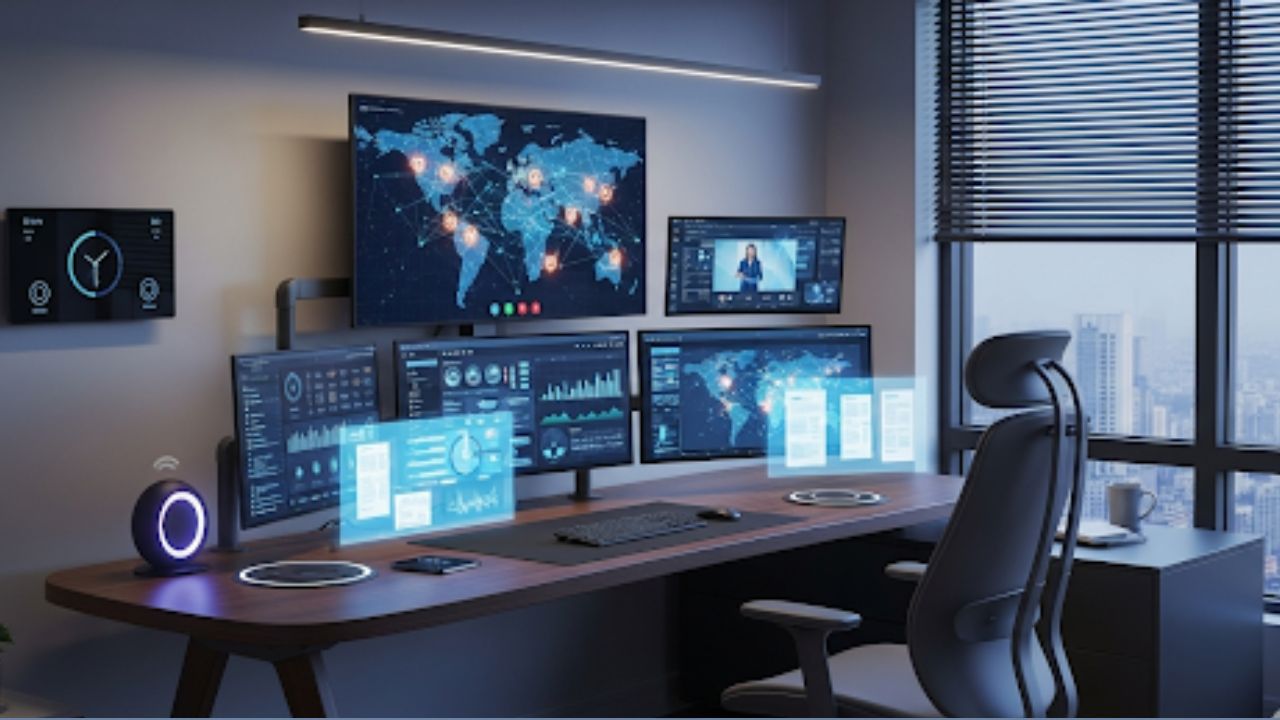
In 2025, with 32% of U.S. workers operating remotely at least part-time, per a 2024 Gallup survey, and global remote work trends accelerating, a smart home office setup is essential for productivity, comfort, and sustainability. The integration of Internet of Things (IoT) devices, ergonomic design.
The Need for Smart Home Offices
Remote work has surged post-COVID, with 60% of tech firms operating globally and 40% of Fortune 500 companies adopting hybrid models, per a 2025 Gartner report. Home offices must support productivity while addressing challenges like Zoom fatigue (reported by 35% of remote workers, per Forbes 2024), cybersecurity risks (27% rise in ransomware attacks, per Verizon 2024), and rising energy costs. Smart setups leveraging IoT, ergonomic design, and energy efficiency optimize workspaces for health, performance, and sustainability.
Key Components of a Smart Home Office
1. IoT Integration for Seamless Workflows
- What It Is: IoT devices like smart lights, thermostats, and AI assistants (e.g., Amazon Alexa, Google Nest) automate tasks and enhance connectivity. Platforms like Microsoft 365 Copilot integrate with IoT for real-time productivity.
- Examples:
- Smart Lighting: Philips Hue adjusts brightness based on time or task, reducing eye strain by 20%, per a 2025 Journal of Human-Computer Interaction study.
- Smart Plugs: TP-Link Kasa monitors energy use, optimizing device power consumption.
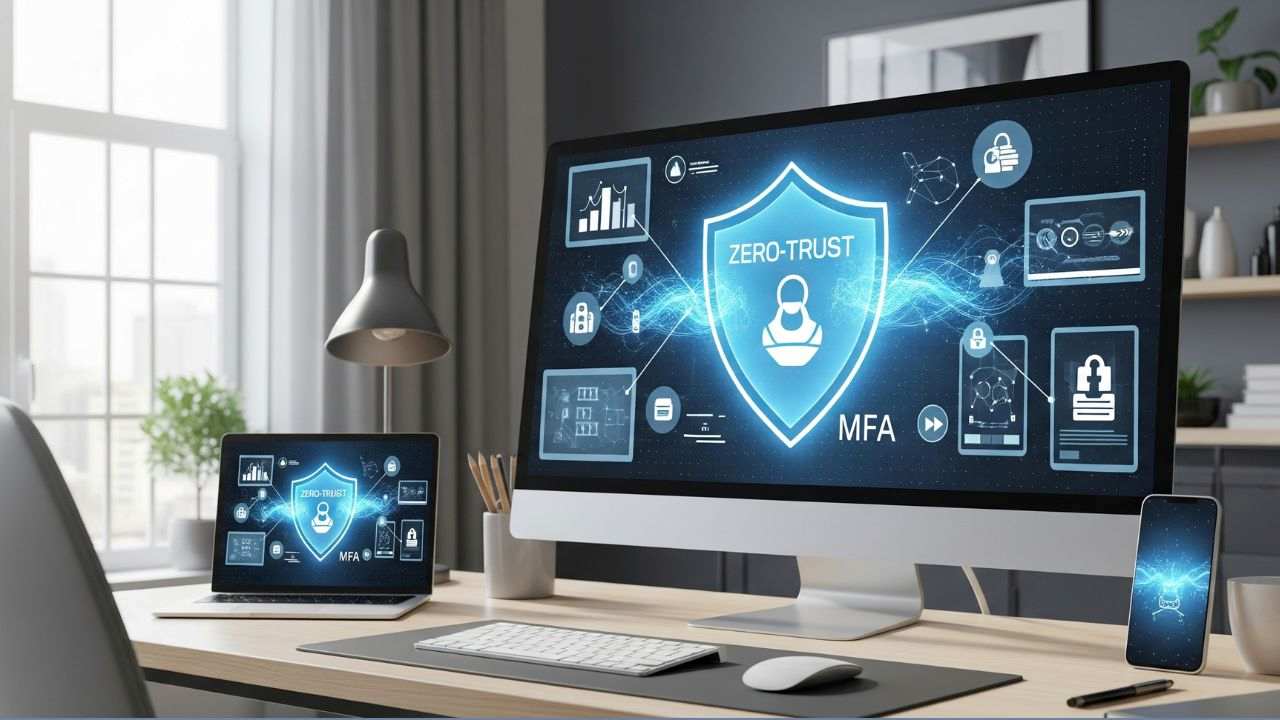
- AI Assistants: GPT-5-powered assistants schedule meetings or flag phishing emails, aligning with zero-trust cybersecurity.
- Real-World Impact: A 2025 HIMSS report found that IoT-enabled home offices in healthcare improved telehealth coordination by 20%, addressing staffing shortages.
2. Ergonomic Design for Health and Comfort
- What It Is: Ergonomic furniture and layouts, such as adjustable desks, chairs, and monitor stands, reduce physical strain and boost productivity.
- Examples:
- Standing Desks: VariDesk’s electric desks adjust height via IoT sensors, promoting movement and reducing back pain by 15%, per a 2024 Ergonomics study.
- Ergonomic Chairs: Herman Miller’s Aeron supports posture, with 80% of users reporting less fatigue, per Forbes 2025.
- Monitor Arms: Ergotron arms position screens at eye level, cutting neck strain by 25%.
- Real-World Impact: Tech workers using ergonomic setups reported a 30% increase in focus time, per a 2025 Stanford study.
3. Energy Efficiency for Cost and Sustainability
- What It Is: Energy-efficient devices and renewable energy solutions, like solar-powered chargers and smart thermostats, reduce costs and environmental impact.
- Examples:
- Smart Thermostats: Nest Learning Thermostat optimizes HVAC usage, saving 10–15% on energy bills, per a 2025 Energy Star report.
- Solar Chargers: Anker’s solar-powered USB hubs support low-power devices, reducing grid reliance.
- LED Lighting: IoT-controlled LEDs cut energy use by 40% compared to traditional bulbs, per IRENA 2025.
- Real-World Impact: Remote workers saved $500 annually on energy costs with smart setups, per a 2025 Global Workplace Analytics report, supporting sustainability goals.
Benefits of a Smart Home Office
- Increased Productivity: IoT automation and AI assistants save 5–7 hours weekly, per a 2025 Deloitte report, streamlining tasks like scheduling or documentation.
- Improved Health: Ergonomic designs reduce musculoskeletal issues, critical for 65% of remote workers reporting discomfort (Forbes, 2024).
- Cost Savings: Energy-efficient setups cut utility bills by 15–20%, vital for budget-constrained professionals in healthcare, per Health Affairs 2025.
- Enhanced Cybersecurity: IoT devices paired with zero-trust practices (e.g., MFA) reduce breach risks by 50%, per Gartner 2025, protecting sensitive data in healthcare and tech.
- Sustainability: Energy-efficient offices align with global net-zero goals, reducing carbon footprints by 54 million tons annually, per Global Workplace Analytics 2025.
Practical Setup Tips for 2025
- Invest in IoT Hubs: Use platforms like Google Home or Amazon Alexa to centralize control of smart devices, integrating with tools like Slack or Microsoft 365 for workflow efficiency.
- Prioritize Ergonomics: Choose adjustable desks and chairs with lumbar support. Spend $200–$500 for quality setups, as recommended by Ergonomics 2024.
- Optimize Energy Use: Install smart plugs and thermostats to monitor and reduce consumption. Pair with solar chargers in regions with high solar potential, like ASEAN or Africa.
- Enhance Cybersecurity: Implement zero-trust measures like MFA and endpoint security (e.g., CrowdStrike), aligning with NTT DATA’s Microsoft Cloud unit for secure remote work.
- Leverage Training: Complete short modules on IoT and cybersecurity, mirroring Microsoft’s 2024 program that trained 1,000 rural hospital staff, to maximize device use.
- Tailor for Space: For small spaces, use compact IoT devices and foldable ergonomic furniture, as 40% of remote workers have limited home office space, per Forbes 2025.
Challenges and Considerations
- Cost Barriers: IoT and ergonomic setups range from $300–$2,000, challenging for rural healthcare workers. Free-tier tools and employer subsidies can help.
- Cybersecurity Risks: IoT devices increase attack surfaces, with 27% more ransomware attacks in 2024 (Verizon). Zero-trust practices are critical.
- Learning Curve: Limited tech familiarity, especially in rural areas, requires training, per HIMSS 2025.
- Energy Access: In developing regions, unreliable grids necessitate solar or battery backups, per IRENA 2025.
Global Perspectives
- North America/Europe: High adoption of IoT and ergonomic setups, driven by tech giants and hybrid work policies. Focus on cybersecurity due to rising threats.
- ASEAN/India: Growing demand for energy-efficient offices as remote work rises, with solar solutions addressing grid limitations, per Allied Market Research 2025.
- Africa: IoT adoption lags due to connectivity gaps, but solar-powered setups are gaining traction, supporting healthcare telework, per IRENA 2025.
The Future of Smart Home Offices
By 2030, smart home offices will integrate AR/VR for immersive collaboration (e.g., Microsoft Mesh) and AI assistants like GPT-5 for predictive task management. In healthcare, ambient intelligence will enhance telehealth, while tech offices will leverage AI-driven IoT for real-time optimization. Energy-efficient designs will align with global sustainability goals, reducing emissions as remote work grows to 50% of jobs, per McKinsey 2024.